
The wrong material can cause premature wear, poor machining, higher costs, or part failure. I always start with the application before I look at material price.
The right CNC machining material depends on the part's working conditions, required strength, corrosion resistance, operating temperature, dimensional stability, machinability, and total manufacturing cost.
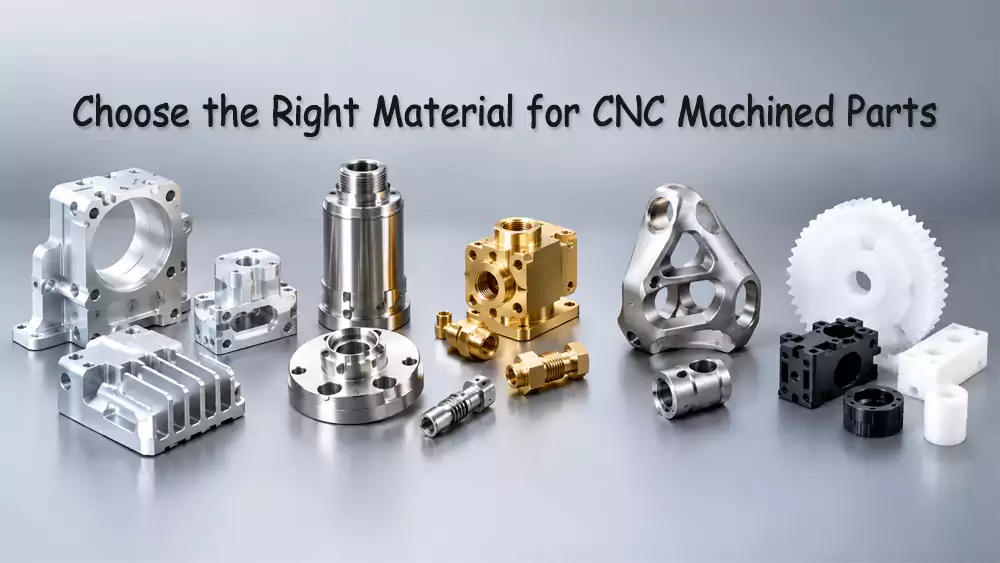
When I select a material for a custom CNC part, I do not look at the material price alone. I first look at how the part will work, how it will be machined, and what the finished part must achieve. This approach helps me avoid a common problem: choosing a material that looks suitable on paper but creates problems during machining or service.
What Factors Should You Consider When Choosing a CNC Machining Material?
A material can look strong and affordable on a specification sheet but still be a poor choice for a CNC machined part. I always check the application first.
When choosing a CNC machining material, I consider the part's load, operating temperature, corrosion exposure, wear conditions, dimensional stability, required tolerance, surface finish, machinability, material availability, and total manufacturing cost.
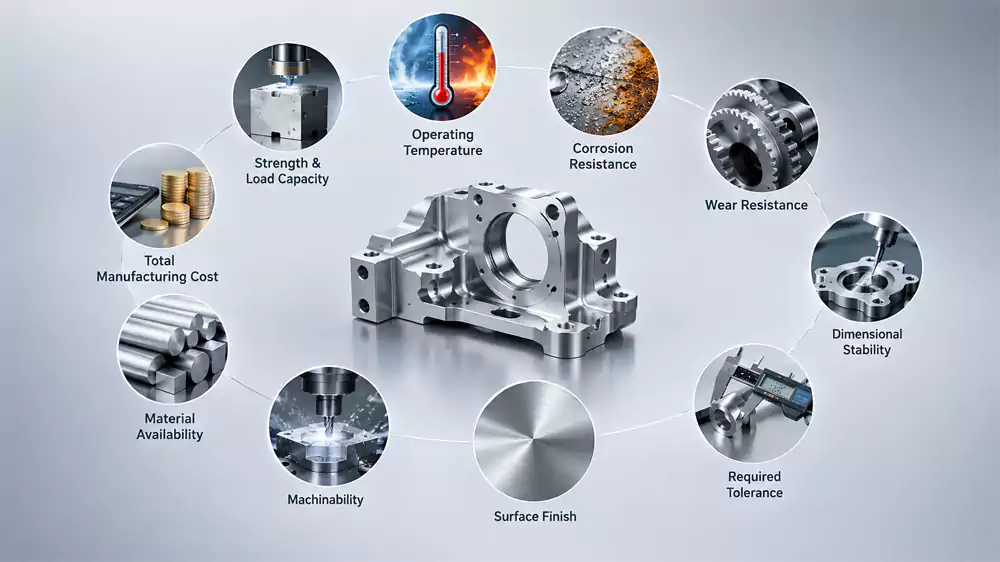
Start With the Working Conditions
I usually begin by asking how the part will be used. A bracket inside an automated machine does not face the same conditions as a hydraulic component, medical fixture, or automotive shaft.
I want to know the expected load, movement, contact conditions, temperature, humidity, chemicals, vibration, and service life. These details often narrow the material choices very quickly.
For example, if a component carries a high mechanical load, I may consider alloy steel or stainless steel instead of aluminum. If weight is a major concern, aluminum may make more sense. If the component needs electrical insulation and low friction, an engineering plastic may be more suitable.
I also pay attention to dimensional stability. Some plastics are easy to machine but can expand, contract, or deform more than metals.1 That matters when a customer requires tight fits or stable dimensions over a wide temperature range.
Machinability Matters More Than Many Designers Expect
I have seen material selection cause machining problems even when the material was technically suitable for the application.
Hard materials can increase tool wear. Tough materials can create difficult chips. Some stainless steels generate heat and work-harden if cutting conditions are not controlled. Some plastics can deform if clamping pressure is too high.
This means I do not separate material selection from manufacturing planning. I consider the cutting tools, spindle speed, feed rate, coolant, workholding method, and required tolerances at the same time.
Check the Critical Material Properties
For most custom CNC parts, I focus on a small group of properties first. I use these properties to compare the practical requirements of different CNC machining materials before I make a final selection.
| Factor | Why I Check It |
|---|---|
| Tensile strength | Helps evaluate resistance to pulling loads |
| Yield strength | Helps determine permanent deformation risk |
| Hardness | Affects wear and machining behavior |
| Corrosion resistance | Matters in moisture, chemicals, and outdoor environments |
| Thermal stability | Matters when operating temperature changes |
| Density | Important when weight must be controlled |
| Wear resistance | Important for moving or contacting parts |
| Machinability | Affects cycle time, tooling, and surface finish |
I do not try to maximize every property. I select the combination that matches the actual application.
What Are the Most Common Materials for CNC Machined Parts?
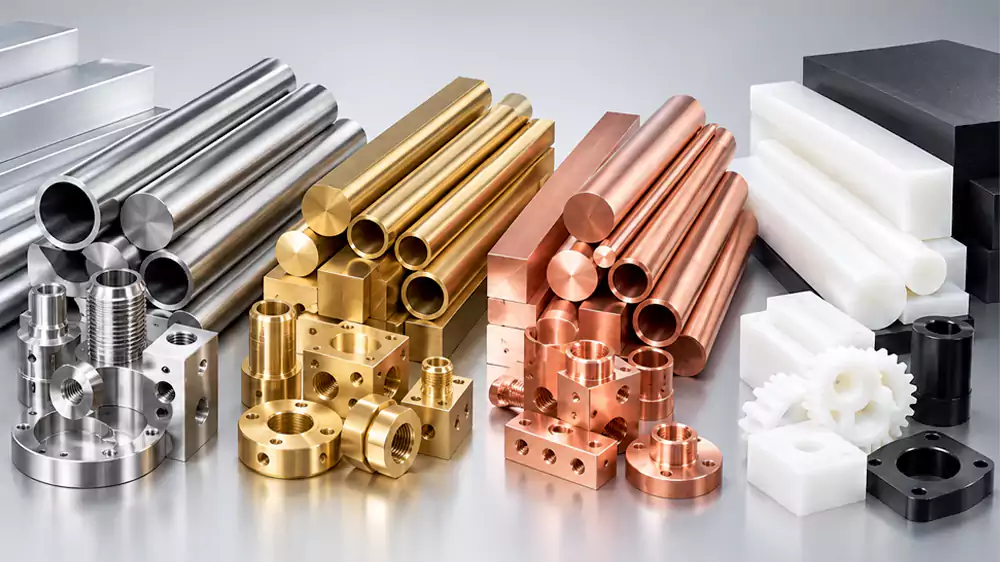
I regularly work with aluminum, stainless steel, carbon and alloy steels, brass, copper, and engineering plastics. Each material has a different balance of performance, cost, and machinability.
The most common CNC machining materials include aluminum, stainless steel, carbon steel, alloy steel, brass, copper, POM, nylon, ABS, PC, and PEEK, with the right choice depending on the part's application and performance requirements.
Aluminum
I often recommend aluminum when low weight, corrosion resistance, and good machinability are important.
Aluminum is widely used for brackets, housings, fixtures, machine components, automotive parts, and electronic enclosures. It machines efficiently and can provide a good surface finish.
Different aluminum grades have different strength and machining characteristics. I do not treat all aluminum as the same material.
Stainless Steel
I use stainless steel when corrosion resistance and mechanical performance are more important than low machining cost.
304 and 316 stainless steel are common choices for many industrial applications. Other stainless grades can provide higher hardness or strength when the application requires it.
I pay special attention to machining strategy when working with stainless steel. Poor cutting conditions can generate heat and encourage work hardening. For applications where corrosion resistance is important, I also consider the specific stainless steel machining material required by the part.
Carbon and Alloy Steel
Steel is useful when the part needs high strength, stiffness, wear resistance, or impact resistance.
I often consider alloy steel for shafts, gears, mechanical components, and load-bearing parts. The final heat treatment can also change the performance of the finished component.
Brass and Copper
Brass is useful for fittings, connectors, bushings, and components where good machinability and electrical or corrosion-related properties are needed.
Copper has excellent electrical and thermal conductivity. However, its machining behavior is different from steel or aluminum, so I consider the cutting process before selecting it.
Engineering Plastics
I also machine materials such as POM, nylon, ABS, PC, and PEEK.
These materials can be useful when low weight, electrical insulation, low friction, chemical resistance, or special operating conditions are required.
PEEK, for example, can be considered for demanding applications, but its higher material cost means I would not select it simply because it is a high-performance material. I first check whether the application actually needs its properties.
How Do You Select the Right Material for a Custom CNC Part?
I select the material by connecting the part's function to its manufacturing requirements. I do not start with a material catalog and work backward.
To select the right material for a custom CNC part, I first define its working conditions and mechanical requirements, then compare suitable materials for strength, machinability, durability, dimensional stability, availability, and total cost.
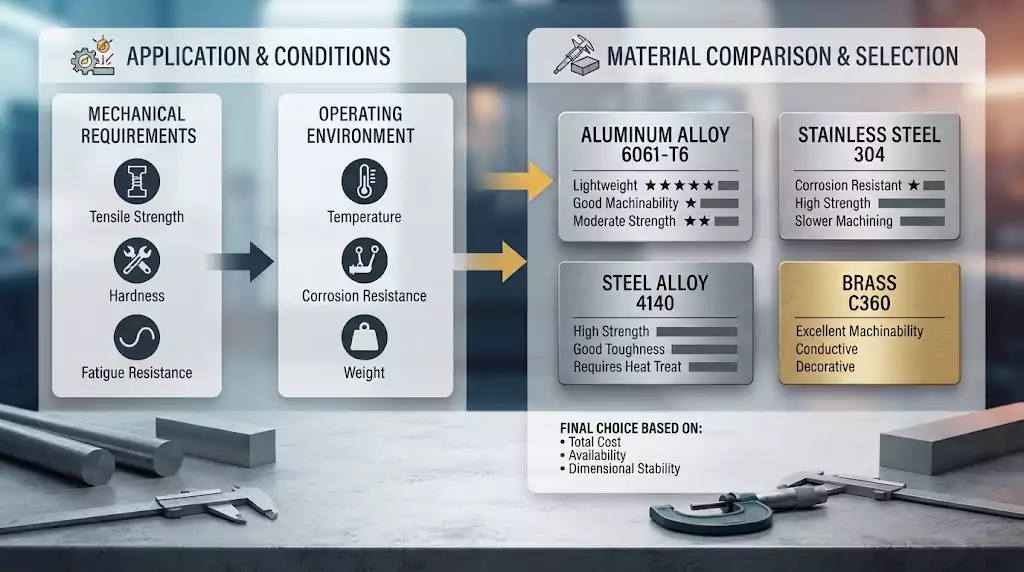
I Start With the Function
When I receive a new drawing, I first ask what the component actually does.
If it supports a load, I focus on strength and stiffness. If it slides against another component, I look at friction and wear. If it is exposed to water or chemicals, corrosion resistance becomes more important.
I also ask whether the part is structural or mainly dimensional. A decorative cover and a precision bearing housing may have similar dimensions, but their material requirements can be completely different.
I Compare Several Suitable Materials
I normally avoid choosing a material too early. I first create a short list.
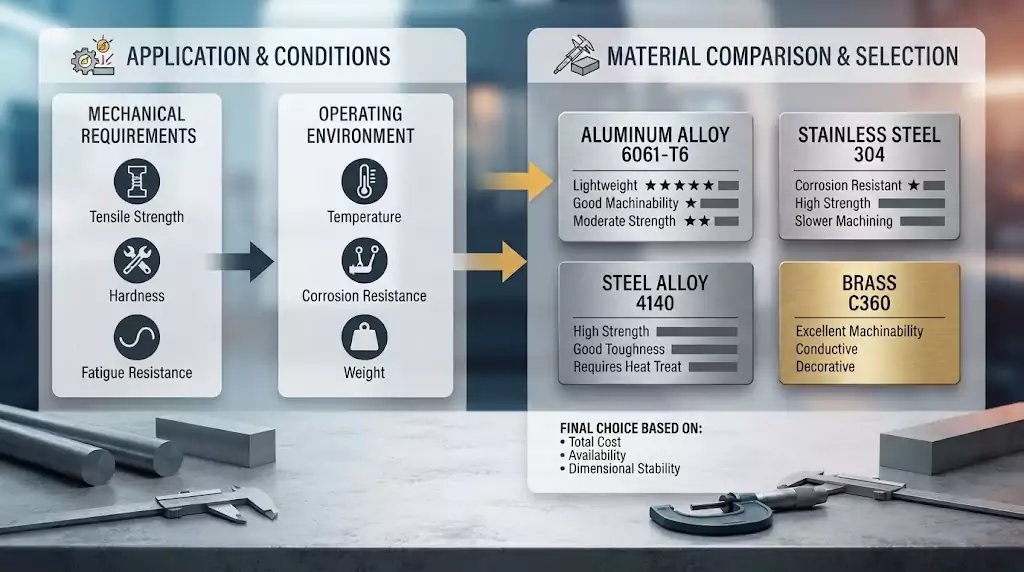
For example, suppose I am manufacturing a precision bracket for industrial automation. Aluminum, stainless steel, and alloy steel might all be technically possible. I then compare their weight, strength, corrosion resistance, machining time, surface treatment, and price.
| Requirement | Aluminum | Stainless Steel | Alloy Steel |
|---|---|---|---|
| Low weight | Excellent | Low | Low |
| Corrosion resistance | Good | Excellent | Moderate |
| Strength | Moderate | High | Very high |
| Machinability | Good | Moderate | Moderate |
| Typical machining cost | Lower | Higher | Higher |
| Typical application | Lightweight structures | Corrosion-resistant parts | High-load components |
This comparison does not mean one material is universally better. It shows why the application has to drive the decision.
A Practical Example From CNC Production
I often use a simple example when explaining material selection to customers.
Imagine a custom mounting bracket that needs to hold a sensor on an automated production machine. The original design calls for aluminum because the bracket needs to be lightweight.
The part has these requirements:
| Parameter | Requirement |
|---|---|
| Part type | Precision mounting bracket |
| Application | Industrial automation |
| Approx. size | 120 × 80 × 25 mm |
| Required tolerance | ±0.02 mm on mounting features |
| Operating temperature | 10–60°C |
| Main load | Static and moderate vibration |
| Corrosion exposure | Indoor factory environment |
| Surface requirement | Anodized finish |
| Production quantity | 500 pcs |
In this situation, I would first evaluate a suitable aluminum grade rather than automatically moving to steel.
The aluminum solution can reduce part weight and machining time while still meeting the application's mechanical requirements. I would then review the drawing for thin walls, deep pockets, clamping points, and areas where machining stress could affect the final dimensions.
If the same bracket were exposed to high impact loads or significantly higher temperatures, I would repeat the material evaluation. The answer could change.
This is why I do not believe there is a universal "best CNC material."2 The right material is the one that meets the real operating requirements without creating unnecessary manufacturing cost.
How Does Material Selection Affect CNC Machining Cost and Part Quality?
Material affects more than the raw material quotation. It can change cutting speed, tool life, cycle time, finishing requirements, scrap risk, and dimensional stability.
Material selection affects CNC machining cost and part quality through raw material price, machining time, tooling, tool wear, finishing, inspection, dimensional stability, and scrap risk. A lower material price does not always produce a lower finished-part cost.
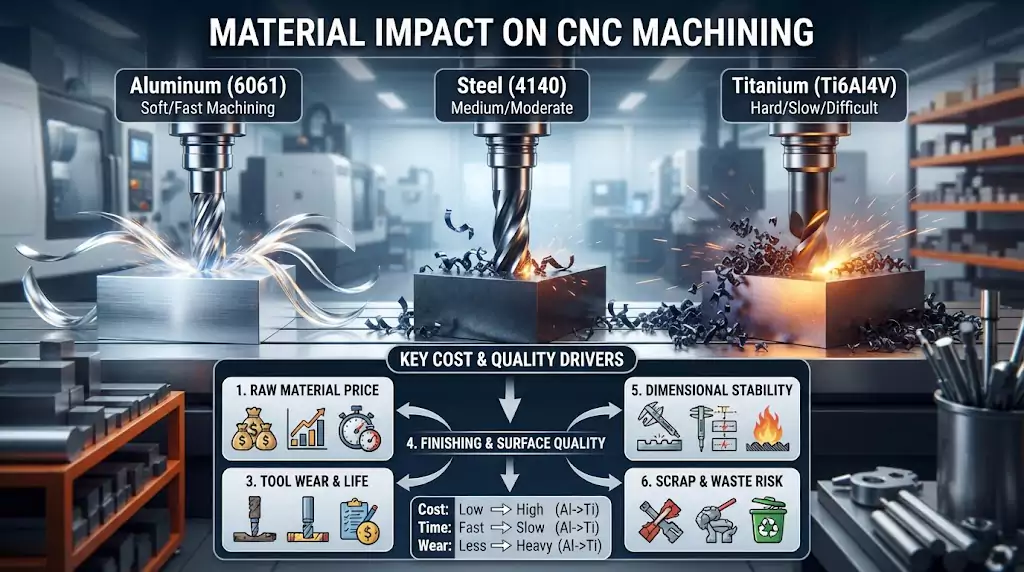
Material Price Is Only One Part of the Cost
I often see customers compare materials based only on price per kilogram. That can be misleading.
A material with a higher purchase price may machine faster and require fewer tools. Another material may be cheap but difficult to machine, increasing cycle time and tool consumption.
For production parts, I look at the total manufacturing cost:
Total cost = material + machining + tooling + finishing + inspection + scrap risk
This gives me a much more useful picture.
Hardness Can Change Tooling Cost
When I machine harder materials, I have to consider insert grade, tool geometry, cutting parameters, coolant, and tool life.
If the material causes excessive tool wear, the machine may need more frequent tool changes. That increases production time and can also affect dimensional consistency.
I also watch for work hardening. Some materials become harder at the machined surface when cutting conditions are not controlled. If the cutting tool rubs instead of cutting correctly, the next pass can become more difficult.
Material Can Affect Part Quality
Material properties can also affect dimensional accuracy.
A thin aluminum component can move because of residual stress or clamping forces. A plastic component can change dimensions with temperature. A hardened steel component can require a different machining sequence to control distortion.
For tight-tolerance parts, I therefore consider the entire process instead of looking only at the final CNC operation.
I may rough-machine the part first, allow the material to stabilize, and then perform the finishing operations. I may also change the workholding method to reduce deformation.
The material and process have to work together.
What Material Information Should You Provide to a CNC Machining Supplier?
I can give a much more accurate manufacturing recommendation when the customer provides the exact material grade and the application requirements.
When requesting CNC machining, provide the exact material grade or specification, required mechanical properties, heat-treatment condition, surface treatment, operating environment, production quantity, and any material certification requirements.
Give the Exact Grade When Possible
"Aluminum" or "stainless steel" is usually not enough for a production quotation.
I prefer to receive the exact grade or standard required by the design. The same material family can contain grades with different strength, hardness, corrosion resistance, and machining behavior.
If the customer does not know the exact grade, I can work from the application requirements and help narrow the options.
Tell Me About Heat Treatment
Heat treatment can change the machining process and final properties.
If the part requires annealing, hardening, tempering, aging, or another treatment, I need to know before planning production.
For some components, I may rough-machine before heat treatment and finish-machine afterward. This can help control final dimensions when heat treatment changes the material.
Specify Surface Treatment
Surface treatment is also part of material selection.
An aluminum part may require anodizing. A steel part may require plating, black oxide, passivation, or another finish. The selected material has to be compatible with the required treatment.
I also check whether the finished coating affects critical dimensions. If a bore or mating surface has a tight tolerance, I account for the finishing process before machining the final size.
Tell Me the Application
This is the information I value most when a customer is unsure about the material.
If a customer tells me, "I need a stainless steel part," I can quote it. But if the customer tells me, "This part will be exposed to coolant, vibration, and repeated contact with another steel component," I can think more deeply about whether stainless steel is actually the right solution.
I want to understand the part's real working conditions.
When I have that information, I can look at material, machining method, tooling, surface treatment, inspection, and production quantity as one process.
That is how I approach material selection after more than 20 years around CNC machining. I do not simply ask which material is cheapest. I ask which material can deliver the required performance with a controlled manufacturing process.
Conclusion
Choosing a CNC material is not simply a matter of finding the lowest material price. I look at the part's working conditions, required performance, machinability, quality requirements, and total manufacturing cost together. When these factors are considered from the beginning, the material choice becomes part of a controlled manufacturing process rather than a source of problems later.
If you have a custom CNC part and are unsure which material fits your application, share the drawing and working conditions with me, and I can help you evaluate the practical options.

Footnotes:
-
"Polymers CLTE Coefficient of Linear Thermal Expansion", https://passive-components.eu/coefficient-of-linear-thermal-expansion-on-polymers-explained/. Engineering texts and polymer property references report that polymers can exhibit higher coefficients of thermal expansion than many metals and can also undergo dimensional change due to viscoelasticity and residual stresses, which may lead to warpage or deformation depending on moisture, temperature, and machining/removal conditions. Evidence role: general_support; source type: education. Supports: Some plastics are easy to machine but can expand, contract, or deform more than metals.. Scope note: Dimensional stability and deformation magnitude are contextual—polymer grade, formulation, cooling/fixture strategy, and environmental exposure determine the extent relative to metals. ↩
-
"Material selection", https://en.wikipedia.org/wiki/Material_selection. Materials selection guidance in engineering references emphasizes trade-offs among properties (strength, stiffness, corrosion resistance, machinability, cost, and processability); no single material is optimal across diverse operating environments and production constraints, so selection must match the application and requirements. Evidence role: expert_consensus; source type: education. Supports: There is no universal best CNC material; the right material depends on operating requirements and manufacturing cost.. Scope note: This supports the general principle of trade-offs and contextual optimization, not the absence of any material that is “best” under a narrowly defined set of requirements. ↩